Thursday, November 27, 2008

Countries by the Signs

Do you know that one of the candidate of the U.S. national symbol is a crab (The New England Crab)?

Why? because the U.S. is a Cancer (astrological symbol)!

Why do the forefathers of U.S.A. wanted to choose astrological symbol for their country? It’s probably because most of them are freemasons, which is very much into astrology.

Well, if the U.S. is a Cancer, then it is supposed to be protective and impenetrable

Well after this event, it is EXTREMELY HARD AND ANNOYING TO ENTER THE COUNTRY, talk about impenetrability :P; and U.S. embassy everywhere has always been very protective to its citizens.

Well, this make me think about other country. What are the zodiacal signs of my country?

My country is Indonesia, born on August 17, 1945, it’s a Leo! … but we choose eagle (garuda) as a symbol of our country. Leos are overly proud of themselves, hmm…. are Indonesian governments  proud of their country? Well of course! But probably not the citizens … (lol, nawww of course they do ;p)


not not lion (singa), we want eagle (garuda)

How about other countries? I put positive and negative traits for each ‘zodiacal’ countries ( please don’t be offended ;) )

ARIES COUNTRIES

action-oriented, brutal
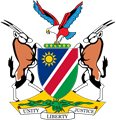
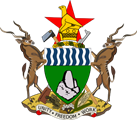
 345px-Coat_of_arms_of_Namibia_svg 514px-Coat_of_arms_of_Greece_svg 380px-Coat_of_Arms_of_Zimbabwe_svg

Namibia (March 21), Greece (March 25), Zimbabwe (April 17)

TAURUS COUNTRIES

crafty-creative, stubborn

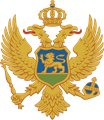
183px-Coat_of_arms_of_Romania_svg 600px-Coat_of_arms_of_Paraguay_svg 520px-Coat_of_arms_of_Montenegro_svg

Romania (May 9), Paraguay (May 15), Montenegro (May 21)

GEMINI COUNTRIES

witty, mischievous
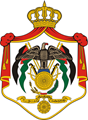
437px-Coat_of_Jordan 400px-Coat_of_Arms_of_Samoa_svg 480px-Coat_of_Arms_of_the_Russian_Federation_svg

Jordan (May 25), Samoa (June 2), Russia (June 12) < correct me if I’m wrong, Russia Day, is it independence day or not . . . a bit conflicting here

CANCER COUNTRIES

protective, hard shelled
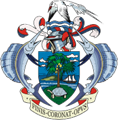
Seychelles_coa 447px-Coat_of_arms_of_Canada_svg 600px-US-GreatSeal-Obverse_svg

Seychelles (June 29), Canada (July 1), U.S. (July 4) < LOTS OF countries have their independence on July

LEO COUNTRIES

proud, chauvinistic
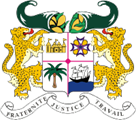
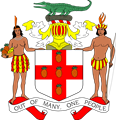
Coat_of_arms_of_Benin 582px-Coat_of_Arms_of_Jamaica_svg 310px-Emblem_of_India_svg

Benin (August 1), Jamaica (August 6), India (August 15)

 VIRGO COUNTRIES

good service, perfectionist
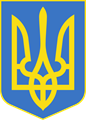
396px-Lesser_Coat_of_Arms_of_Ukraine_svg 500px-Coat_of_arms_of_Vietnam_svg 542px-Coat_of_arms_of_Honduras_svg

Ukraine (August 24), Vietnam (September 2), Honduras (September 15) > lots of socialist country

LIBRA COUNTRIES

strong politic, indecisive
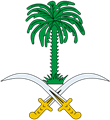
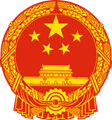
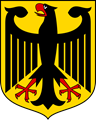
275px-Coat_of_arms_of_Saudi_Arabia_svg 271px-National_Emblem_of_the_People%27s_Republic_of_China_svg 480px-Coat_of_Arms_of_Germany_svg

Saudi Arabia (September 23), China (October 1), German (October 3)

SCORPIO COUNTRIES

patriotic, deep and dark
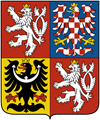
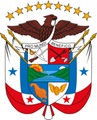
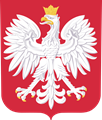
499px-Coat_of_arms_of_the_Czech_Republic_svg Panama_Coat_of_Arms 509px-Herb_Polski_svg

Czech Republic (October 28), Panama (November 3), Poland (November 11)

 SAGITTARIUS COUNTRIES

free-minded, messy
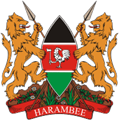
  Coat_of_arms_of_Suriname306px-Coat_of_arms_of_tanzania_svgKenya_coa

Suriname (November 25), Tanzania (December 9), Kenya December 12

CAPRICORN COUNTRIES

disciplined, bureaucracy
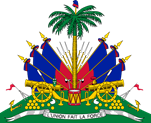
600px-Coat_of_arms_of_Haiti_svg 616px-Coat_of_arms_of_Brunei_svgSudan_coa

Haiti (January 1), Brunei (January 1), Sudan (January 1) > talk about being overwhelmed by larger celebration


AQUARIUS COUNTRIES

inventive, rebellious
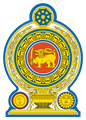
433px-Coat_of_arms_of_Sri_Lanka_svg Gambia_coa 450px-Coat_of_arms_of_Nauru_svg

Nauru (January 31), Sri Lanka (February 4), Gambia (February 18)

PISCES COUNTRIES

dreamy, helpless

357px-Coat_of_arms_of_the_Dominican_Republic_svg 526px-Bosnia_and_Herzegovina_Coats_of_Arms_modified_svg 429px-Coat_of_arms_of_Mauritius_svg

Dominican Republic (February 27), Bosnia (March 1), Mauritius (March 12)


conclusion:
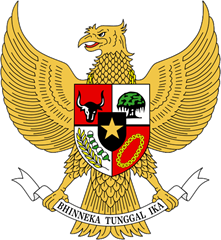
511px-Garuda_Pancasila%2C_Coat_Arms_of_Indonesia_svg

  1. eagle rules!
  2. astrology + politic = bad.
  3. very hard to determine the birth of a nation. Is it the political form of the country, is it declared? or recognized? @_@
  4. summer is good for nation’ birth. winter is bad . . .
  5. thanks to Wikipedia for the nice arms and symbols.

Monday, November 10, 2008

Orbiting Frog – Cool Wallpaper

planets

From one of the coolest website about astronomy, http://orbitingfrog.com/blog/; basically the size of the font is relative to the size of the body. You may have to zoom a lot to see some of the relatively new Nordic satellite of Saturn.

Wednesday, June 25, 2008

Sundial of Prinsentuin, Groningen

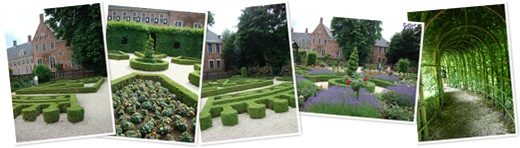
DSC00332 Prinsentuin’s sundial

Sundial of the Prinsentuin (Groningen, The Netherlands) etched just above the entrance to the garden. Nothing really symbolically interesting in the sundial apart that the sun has a “nose” that acts as a shadow-catcher. And some fancy Latin and Dutch words. I should admit that I didn’t really put enough effort on researching this particular sundial. Its a beautiful sundial though.

DSC00349 No shadows! Damn Dutch weather! Some long words including: Tempus Praeteritum Nihil Futurum Incertum Praesens Instabile Cave Ne Perdas Hoc Tuum; and one particular sentence Italianische Uren. Hmmm…

The garden itself is also interesting. It is one of the purest examples of a Renaissance garden in Netherlands, with its rose garden (I don’t even recognize roses until I saw the photo in my computer) and herbs garden. Some of the hedges also forms a 'W' and 'A' (for the first letter of Willem Frederik of Nassau and his wife Albertine Agnes of Nassay (the stadholder of Groningen) (see pictures below). Cool and charming little garden anyway.

PS: my first attempt to use MSN Photo Album. Cute, but I need some copyrighting features.

Saturday, March 29, 2008

Leiden’s Museum Boerhaave

A trip to Museum Boerhaave or the National Museum of the History of Science and Medicine. I don’t really understand Dutch (my brain is getting weaker and weaker), but the collections are amazing.

DSC00088  DSC00097 (left) The Leiden Sphaera. (right) a very nice celestial globe, showing all kinds of language like Latin, English, Greek, and Arabic!

DSC00131  DSC00132 This mechanical work is illuminated by light from behind, and it rotates. I have no idea what is this but I think it is a relatively modern invention. Or at least after the discovery of Saturn’s ring and both Uranus and Neptune.

Thursday, November 8, 2007

Labors of the Month in Très Riches Heures du Duc de Berry

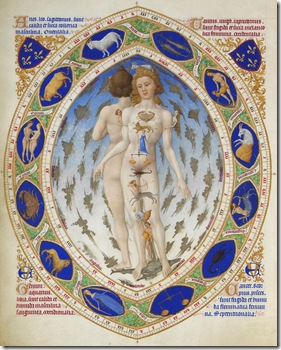
©Photo. R.M.N. / R.-G. OjédaThe Anatomical Man, showing the influences of zodiac signs to different body part of human body. Starting from the top Aries (head), to the bottom Pisces (feet). source: Anatomical_Man.jpg

The "Très Riches Heures du Duc de Berry" or simply the "Très Riches Heures" ("The Very Rich Hours of the Duke of Berry") is a very richly decorated Book of Hours commissioned by Jean, Duc de Berry in about 1410. It is probably the most important illuminated manuscript of the 15th century, "le roi des manuscrits enluminés" ("the king of illuminated manuscripts"). It consists of 416 pages, including 131 with large miniatures and many more with border decorations or historiated initials, that are among the high points of International Gothic painting in spite of their small size. The book was worked on, over a period of nearly a century, in three main campaigns, led by the Limbourg brothers, Barthélemy van Eyck, and Jean Colombe. The book is now Ms. 65 in the Musée Condé, Chantilly, France.

Illuminations

It was natural for a book of hours to put together pictures of the seasons, but the illustrations of months in the "Très Riches Heures" are exceptional and innovative in their scope, subjects, composition, and artistic and technical execution. Most of them show one of the duke's castles in the background, and are filled with details of the delights and labors of the months, from the Duke's court to his peasants, a counterpart to the prayers of the hours. Each illustration is surmounted with its appropriate hemisphere showing a solar chariot, the signs and degrees of the zodiac, and numbering the days of the month and the martyrological letters for the ecclesiastic lunar calendar.

Artists

It was illuminated (painted) sometime between 1412 and 1416 by the Limbourg brothers for their patron. The writing, illuminated capitals, border decorations, and gilding was most likely executed by other specialists who remain mostly unknown. The Limbourg brothers left the book unfinished and unbound at their, and the Duke's, death in 1416. The work passed to the Duke's cousin, the royal art lover and amateur painter René d'Anjou, who had an unidentified artist, the so-called "Master of the Shadows", who was probably Barthélemy van Eyck, work on the book in the 1440s. Forty years later Charles I, Duc de Savoie commissioned Jean Colombe to finish the paintings between 1485 and 1489. In addition Pognon identifies the "pious painter" who painted many of the religious scenes later in the book during the initial campaign. The "courtly", "rustic" and "pious" painters would probably equate to the three Limbourg brothers, or perhaps other artists in their workshop. There are alternative analyses and divisions proposed by other specialists.


©Photo. R.M.N. / R.-G. Ojéda ©Photo. R.M.N. / R.-G. Ojéda ©Photo. R.M.N. / R.-G. Ojéda
March
Sowing the field. In the background is the
Château de Lusignan, a residence of Jean de Berry.
April 
young couple exchanging rings. In the background is the
Château de Dourdan.
May
Young nobles riding in a procession. In the background is the
Palais de la Cité in Paris.

©Photo. R.M.N. / R.-G. Ojéda ©Photo. R.M.N. / R.-G. Ojéda ©Photo. R.M.N. / R.-G. Ojéda
June
Harvest. In the background is the
Hôtel de Nesle, the Duke's Paris residence.
July
The shearing of the sheep. In the background is the
Château de Clain near Poitiers.

August
Falconry, with the Duc's Château d'Étampes in the background.
©Photo. R.M.N. / R.-G. Ojéda ©Photo. R.M.N. / R.-G. Ojéda ©Photo. R.M.N. / R.-G. Ojéda
September
The harvest of the grapes. In the background is the
Château de Saumur.

October
Tilling the field. In the background is the
Louvre.
November
The autumn harvest of acorns, on which pigs are feeding.
©Photo. R.M.N. / R.-G. Ojéda ©Photo. R.M.N. / R.-G. Ojéda ©Photo. R.M.N. / R.-G. Ojéda
December
wild boar hunt. In the background is the
Château de Vincennes.
January
The Duke's household exchanges New Year gifts - the Duke at right in a blue robe.
February
A typical winter's day. Some peasants warm themselves by the fire, another peasant chops wood, and still another goes to market.

Sources:

http://en.wikipedia.org/wiki/Tr%C3%A8s_riches_heures_du_Duc_de_Berry