
A sundial commemorating the quatercentenary of Olomouc University (1573–1973) on the facade of the Faculty of Philosophy
Monday, September 13, 2010


Saturday, August 21, 2010
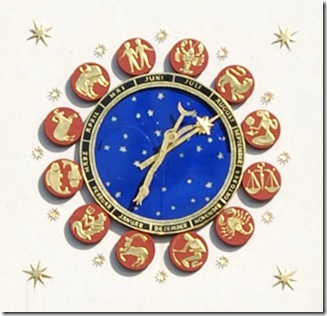 Rathaus, Worms, Germany
Sunday, November 8, 2009
Mars during the Noachian Epoch


The view is centered around the area called the Ares Vallis (below right, the water filled basin). This area shows variety of water related features, e.g. sediments, river canyons, and flat-bottomed crater (characteristic of an ancient water-filled craters). Some water overflowed from the crater that contains them, creating flood across the plain.
Also shown are some meteors impacting the Martian surface.
I am not very sure what is that volcano on the left. Volcanism is important in forming water in Mars. Volcano produces material for a thicker atmosphere, in this visualization, you can even see there’s a plume of gas coming out from the volcano. This process makes the planet warmer and makes it possible for water to form. That volcano is probably part of the Alba Mons volcanic system, although I think Alba Mons should be a little bit to the north.
The color of Mars is not red during that time, because the oxidation of the soil happens when the volcanism stops.

Source:
Sunday, November 1, 2009
One of the Oldest Globe from the Islamic World

No functional celestial globe has come down to us that predates the coming of Islam. This celestial globe is a three-dimensional model of the universe, and is the third-oldest globe from the Islamic world. Only two others, created by an Andalusian astronomer, are older, and this is the oldest known globe from the eastern part of the Islamic world.
The globe differs from its Andalusian predecessors by the use of an alphanumeric system of notation (abjad) for numbering the stars within each of the 120 Ptolemaic constellations. Each of the 1,025 stars depicted is represented by a dot of inlaid silver, a technique that was unknown in the West. The diameter of the point varies depending on the magnitude of the star. The two hemispheres that make up the globe are joined along the Milky Way. The globe represents the final celestial sphere, that of fixed stars - a very precise version of Ptolemy's Almagest, a catalogue of stars written in Alexandria in the 2nd century AD. The difference between Islamic globes and what we know about ancient globes lies in the fact that Islamic globes represented the constellation from the front, instead of from the back.
Scientifically, this globe is exceptionally precise. It was created by a master astronomer who was capable, as the inscription engraved in the vicinity of the South Pole indicates, of recalculating astronomical calculations: "This globe comprises all of the constellations mentioned in the Almagest, after modification according to the time elapsed between the calculations of Ptolemy and year 540 of the Hejira: that is, fifteen degrees and eighteen minutes. Created by Yûnus Ibn al-Husayn al-Asturlabî in the year 539." The iconography of the constellations faithfully follows the model presented in the Book on the Constellations of Fixed Stars (kitab suwar al-kawakib) by 'Abd al-Rahman al-Sufi. The original of this work was lost, but we have been able to reconstitute it through a copy made by al-Sufi's son in 1099 and a manuscript from 1125 that explicitly refers to it. In addition to its remarkable scientific precision, the work is equally captivating due the quality of the engraving. Many of the clothed figures, including Cassiopeia, feature drapery comparable to figures in manuscripts. Their sinuous and stylized folds are characteristic of the art of the book that continued to develop into the mid-13th century, and even beyond, in the Arab part of the Islamic world.


Source:
Saturday, September 19, 2009
The Star Wars Galaxy – More Science than Fiction

“If there's anything I like more than space it's fake space. That's why this map of the Star Wars Galaxy, from Coruscant to the Wild Space region, has me fascinated this morning. High res inside.”
|
| In the Star Wars sci-fi saga, the fictional planet Bespin is an immense gas giant surrounded by a number of moons. It contains a band of habitable atmosphere among the clouds. This is where Cloud City is located, a mining colony set up to extract valuable Tibanna gas. |
|
| Situated in the heart of the fictional Star Wars galaxy, the planet Coruscant is completely covered by one massive city and is the seat of government for both the Galactic Republic and later the Empire. |
|
| Dagobah is a forgotten world where Luke Skywalker trains with the Jedi master Yoda in The Empire Strikes Back. Its huge lagoons and mist-shrouded swamps are teeming with life. |
|
| In the Star Wars films, the fictional planet Hoth is a world of snow and ice. Although small meteorites from a nearby asteroid field constantly pelt its surface, the planet has developed several life-forms, including the tauntaun snow lizard ridden by rebel soldiers in The Empire Strikes Back. |
|
| In Star Wars: Episode III: Revenge of the Sith, the fictional planet Mustafar serves as a volcanic backdrop for the final duel between the characters Obi-Wan Kenobi and Anakin Skywalker. |
|
| In the Star Wars movie saga, the fictional planet Naboo serves as the home of Queen Amidala. It's an idyllic world populated by peaceful humans and a species of intelligent amphibians, the Gungans. |
|
| The large and dusty planet Tatooine is the fictional home of Anakin and Luke Skywalker in the Star Wars sci-fi saga. |


source:
Trukstop via Wookieepedia via Dark Roasted Blend via gizmodo.com/tag/astronomy/
http://news.nationalgeographic.com/news/2005/06/photogalleries/starwarsgalaxy/index.html
Subscribe to:
Posts (Atom)

